As of 24 September 2026, the US State Department rates the UAE Level 3 – "Reconsider Travel", while the UK Foreign Office does not advise against travel. The US advisory, updated on 28 August 2026, cites terrorism and armed conflict; the FCDO lifted its "all but essential travel" warning on 18 June 2026. Both warn of possible flight disruption, and several airlines remain suspended, so your airline, booking type and insurance decide the trip.
What does the US State Department say about travel to Dubai?
The US State Department rates the UAE Level 3: "Reconsider Travel", citing terrorism and armed conflict, in a travel advisory updated on 28 August 2026 and checked on 24 September 2026. Level 3 is the second-highest of its four levels; Level 4 is "Do Not Travel".
The 28 August update changed neither the level nor the risk indicators – it recorded that, from 29 August, family members may join US government employees working in the UAE.
| US State Department | UK Foreign Office (FCDO) | |
|---|---|---|
| Advice on the UAE | Level 3: Reconsider Travel | Does not advise against travel |
| Last updated | 28 August 2026 | 24 July 2026 |
| Reasons given | Terrorism and armed conflict | Regional tensions, strikes and retaliatory attacks by Iran, possible flight disruption |
The armed-conflict warning is specific: "Following the onset of hostilities between the United States and Iran on February 28, 2026, there has been an ongoing threat of drone and missile attacks from Iran and significant disruptions to commercial flights." It adds that the Iranian regime "has publicly stated its intention to target locations in the UAE associated with the United States."
On terrorism, the State Department says attackers "may attack with little or no warning and may target tourist locations, transportation hubs, shopping areas, government facilities, places of worship". The FAA has also issued an advisory notice over risks to civil aviation in and near the Persian Gulf and Gulf of Oman region, including the UAE.
The State Department asks US citizens who decide to go to:
- enrol in the Smart Traveler Enrollment Program (STEP) to receive alerts from the US embassy or consulate;
- have a plan to depart in an emergency that does not depend on US government help;
- buy travel insurance – "We highly recommend that you buy travel insurance before you travel" – and ask the insurer about evacuation, medical and trip-cancellation cover;
- know the local laws – it warns that breaking the UAE's strict rules "can lead to arrest, fines, or an exit ban"; see our guide to Dubai rules for tourists.
The primary source is the State Department's UAE travel advisory. The other Gulf states, including Saudi Arabia, Oman, Kuwait, Qatar and Bahrain, carried the same Level 3 rating in the State Department's advisory feed on 24 September 2026.
What does the UK Foreign Office say about travel to Dubai right now?
The FCDO's UAE travel advice does not advise against any travel to the country: its page was "still current at 24 September 2026" and last updated on 24 July 2026, when we checked. It warns that "the situation in the Middle East remains unpredictable" and that "there is a risk of more attacks and unforeseen escalation in the region".
Its general line is blunt: "No travel can be guaranteed safe." It adds: "If you choose to travel, research your destinations and get appropriate travel insurance." Read the full advice on gov.uk's UAE travel advice page, which is the primary source for everything in this section.
| Date (2026) | What the FCDO changed |
|---|---|
| 28 February | After reported missile attacks, British nationals in the UAE told to shelter in place; later that day, the FCDO advised against all but essential travel to the UAE |
| 9 March | Dependants of British Embassy staff temporarily withdrawn as a precaution; the embassies in Abu Dhabi and Dubai kept operating |
| 18 June | The FCDO no longer advised against all but essential travel to the UAE |
| 13 July | Updated information about regional tensions |
| 24 July | Updated for strikes and retaliatory attacks by Iran since 8 July – still no advice against travel |
The dates come from the change history on the FCDO's UAE page, checked on 24 September 2026. Search results and older articles that say the FCDO advises against travel to the UAE date from before 18 June 2026.
Is Dubai affected by the Iran war?
Yes – the UAE was directly affected earlier in 2026, and the FCDO says the regional risk has not gone away. Its advice states that the US and Iran announced a memorandum of understanding on 17 June, "however the situation in the Middle East remains unpredictable".
It adds that since 8 July there have been "strikes and retaliatory attacks by Iran in a number of locations across the region against US military and civilian infrastructure".
The FCDO also notes that, before the ceasefire, the Iranian regime "had stated its intention to target locations associated with the US and Israel, including organisations, businesses, facilities, and institutions". The practical effect on visitors has mostly been on flights: Dubai International's traffic fell 31.3% to 31.5 million passengers in the first half of 2026, and Dubai Airports said in a 26 August 2026 statement that regional airspace constraints continued to influence traffic.
Nobody can say how the conflict will develop from here, and this page does not try to. What the FCDO asks visitors to do is in the alert section below.
Are flights to Dubai running – and which airlines have stopped?
Dubai International is operating, but many foreign airlines have not returned yet. Dubai Airports said on 26 August 2026 that nearly 50 international airlines were operating there by the end of June, and that it anticipates "stronger momentum in the second half of the year". Emirates, Etihad, flydubai and Air Arabia "continue to operate key regional routes", Gulf News reported on 10 September 2026, though delays and short-notice cancellations remain possible.
| Airline | Dubai flights | Until |
|---|---|---|
| British Airways | Suspended; returns with one daily London flight | 3 November 2026 |
| Virgin Atlantic | Suspended | October 2027 |
| Air France | Suspended | 13 October 2026 |
| KLM | Suspended | 24 October 2026 |
| Wizz Air | Suspended (Dubai and Abu Dhabi) | 24 October 2026 |
| Lufthansa | Munich and Frankfurt flights resume | 25 and 26 October 2026 |
| Swiss | Zurich flights resume | 27 October 2026 |
| Singapore Airlines | Suspended | 24 October 2026 |
| Cathay Pacific | Suspended | 30 November 2026 |
| Finnair | Suspended | 27 March 2027 |
| Air Canada | Suspended | Mid-January 2027 |
| Korean Air | Suspended | No date set |
| Turkish Airlines | Resumed | – |
Source: The National's airline round-up of 22 September 2026. British Airways' Abu Dhabi flights stay suspended until the winter 2027–28 season, the same report says.
These dates keep moving: in that round-up, British Airways had moved its Dubai restart from 25 October to 3 November and Cathay Pacific from 25 October to 30 November. Check your airline's own page on the day, and follow Air Canada's advice to its passengers: don't head to the airport "unless you have a confirmed flight… and your flight is operating as scheduled".
Should you cancel your trip to Dubai?
This section explains your rights, not whether to go. With no FCDO advice against travel, UK travellers have no automatic right to a free cancellation just because of the regional situation. What you're entitled to depends on how you booked, according to ABTA's travel insurance guidance on the Middle East conflict:
- Package holiday: if it's cancelled because the FCDO has advised against travel, "your tour operator is responsible for the cancellation" – contact them for a refund or an alternative holiday.
- Flight only: if your flight is cancelled, contact the airline first to arrange a refund or an alternative flight.
- Hotel or other bookings: contact each supplier first for a refund or alternative arrangements; insurance may cover unrecoverable costs, subject to your policy.
All three routes start with the operator, airline or supplier cancelling, or with a change in FCDO advice. If you decide not to travel while your flight is operating and the FCDO advice is unchanged, you're relying on your booking's own cancellation terms. Booked from the US? ABTA's package-holiday rules are UK ones, so your options come down to your airline's fare rules, your hotel's cancellation terms and your insurance policy.
For package holidays, ABTA says a refund may be due if "unavoidable and extraordinary circumstances" at the destination prevent the trip, but that customers "cannot expect travel warnings issued by the FCDO to equate to free cancellation rights" (ABTA guidance). Ask your operator how it is treating your travel date.
A five-point check before you decide:
- FCDO status on gov.uk today.
- Your airline's status for your exact date, on its own website.
- Your booking type – package, flight only or hotel only.
- Your insurance wording – the war and "known event" exclusions, and the date you bought the policy.
- Your free-cancellation deadlines on the hotel and any flexible fare.
Does travel insurance cover Dubai right now?
Standard travel insurance usually excludes claims caused by war or a conflict that was already known when you bought the policy. MoneySavingExpert reported on 28 April 2026 that "most travel insurance won't cover Middle East flight disruption". It listed standard exclusions as war, invasion or armed conflict, travelling against FCDO advice, and abandoning a trip because of uncertainty.
MSE also warned that the conflict is a "known incident", so "new policies generally won't cover anything linked to events that are already considered 'known'". That guidance dates from before the FCDO's 18 June change, so check your insurer's current wording – MSE's "known incident" warning was about new policies.
ABTA's guidance adds that if the FCDO changes its advice after you've booked or bought insurance and you can no longer travel, you "may be able to claim for cancellation". But "if the FCDO advises against all travel, any claims relating directly to that advice will not be covered."
Ordinary claims – illness, injury, lost bags – still depend on having a policy.
The FCDO says you may be stopped from using UAE healthcare facilities "without travel insurance or without the means to pay", and may be prevented from leaving if you can't pay a medical bill.
The FCDO advises "adequate travel health insurance and accessible funds to cover the cost of any medical treatment abroad and repatriation", so buy cover when you book and read the war and known-event clauses. US policies word these clauses differently, so ask your insurer how it treats the conflict and government travel advisories before you buy.
What should you do if there is an alert while you are in Dubai?
The FCDO tells British nationals in the Middle East to be prepared for "possible flight cancellations, periodic airspace closures, and potential travel disruptions", and to:
- sign up to FCDO travel advice email alerts;
- follow advice from the local authorities;
- monitor local and international media, including updates on airports and airspace, which "could close at short notice";
- stay away from areas around security or military facilities;
- keep your departure plans under review and your travel documents up to date;
- if told to take shelter, stay indoors or find the nearest safe building – an interior stairwell or a room with few external walls or windows may give more protection;
- never approach or touch drone or missile fragments or unusual objects.
The FCDO says the greatest risk "is from falling debris caused by intercepts, and you are safest inside a secure structure".
Is Dubai safe for families, women and solo travellers?
Away from the regional conflict, the FCDO's everyday advice for the UAE is about terrorism awareness, local laws and ordinary precautions. It says terrorists "are likely to try to carry out attacks" in the UAE and that attacks "could be indiscriminate, including in places visited by foreign nationals", so maintain a high level of security awareness in public places.
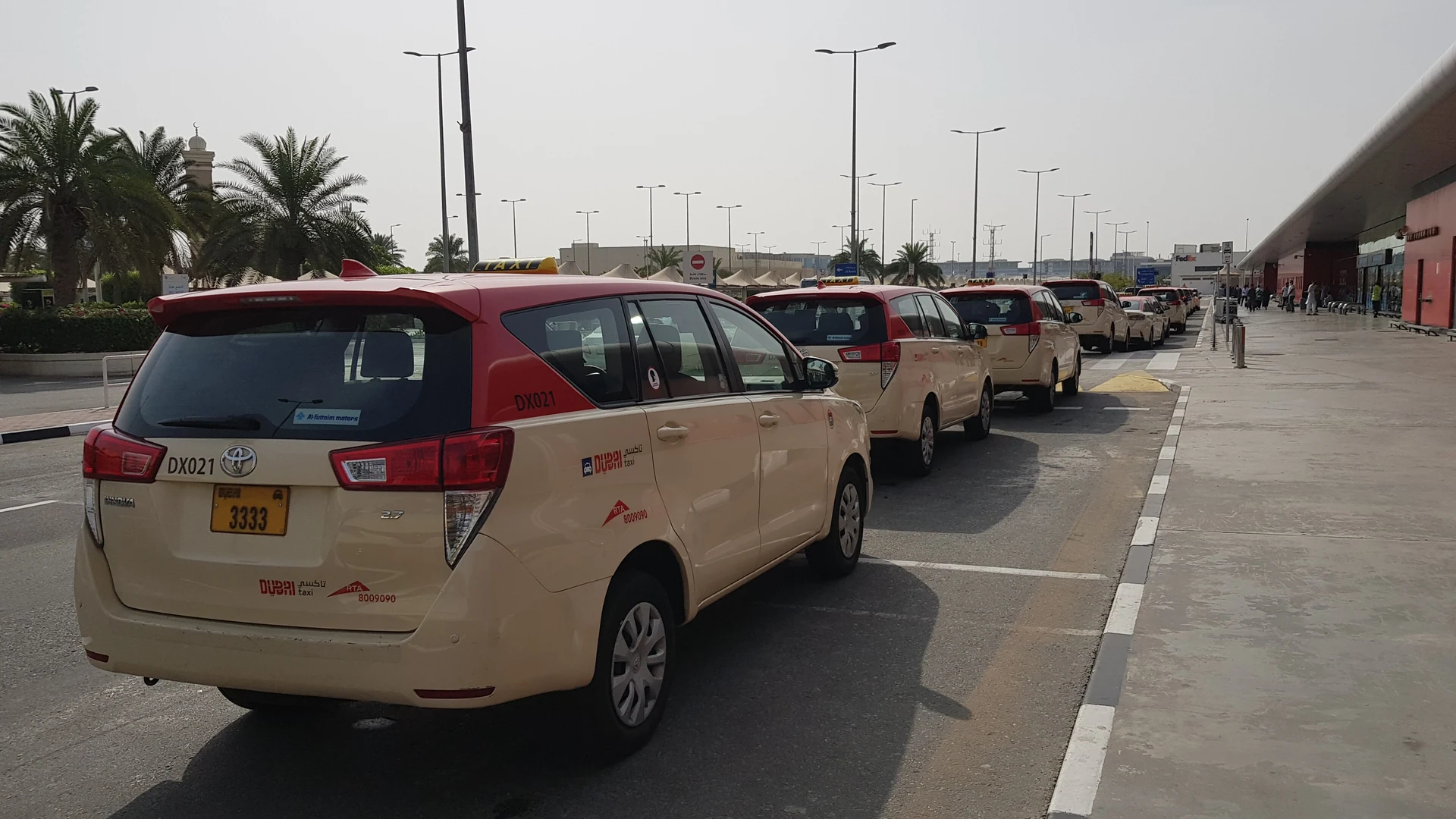
For women, the FCDO advises taking care "when walking or travelling alone or at night", using a reputable taxi company and not accepting lifts from strangers. Licensed Dubai taxis are cream with coloured roofs, and pink-roofed taxis have female drivers; Careem and Uber are also listed as recognised options.
- Dress: in public areas such as malls, women should cover shoulders and knees; swimwear is for beaches and pools only.
- Alcohol: the legal drinking age is 21 in Dubai; drinking or being drunk in public is illegal, and there is zero tolerance for drink-driving.
- Affection: showing affection in public is frowned upon, and you can be arrested for kissing in public.
- Children: under-18s can't stay in a hotel without an adult, the FCDO notes.
Travelling with children? Our guide to things to do in Dubai with kids covers the practical side. If you're weighing a summer trip, the heat is the main thing to plan around – see the best time to visit Dubai month by month.
How this page is kept current: we re-check the US State Department's and the FCDO's UAE advisories, The National's airline round-up and the airlines' own pages, and update the date at the top. Last checked 24 September 2026.
As of 24 September 2026, the US State Department says reconsider travel and the UK FCDO does not: read both, then check your airline and your policy wording before you go.
If you go ahead, our guide to where to stay in Dubai and the best things to do in Dubai will help you plan the trip itself.
Featured image: Ravi Dwivedi / Wikimedia Commons / CC BY-SA 4.0